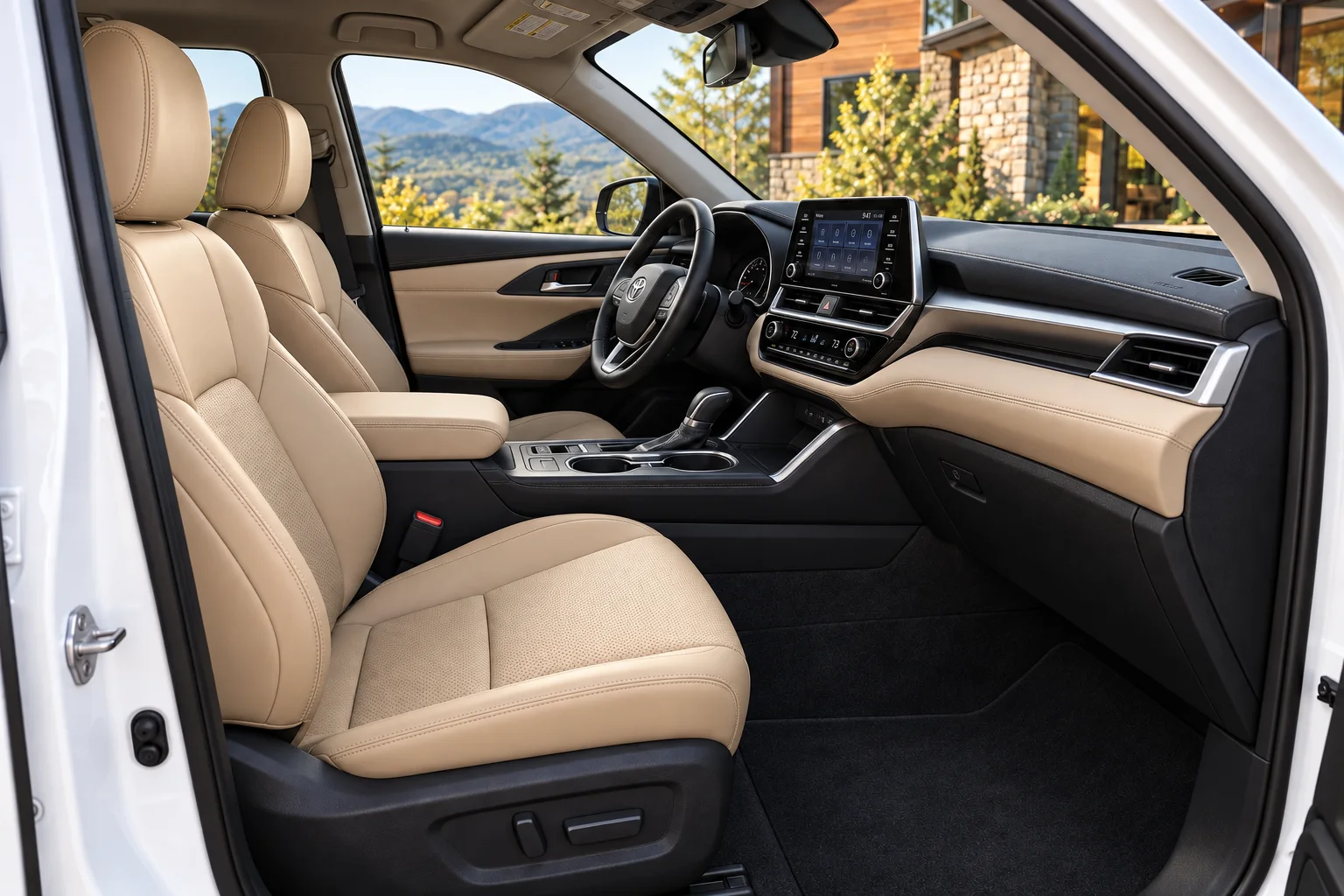
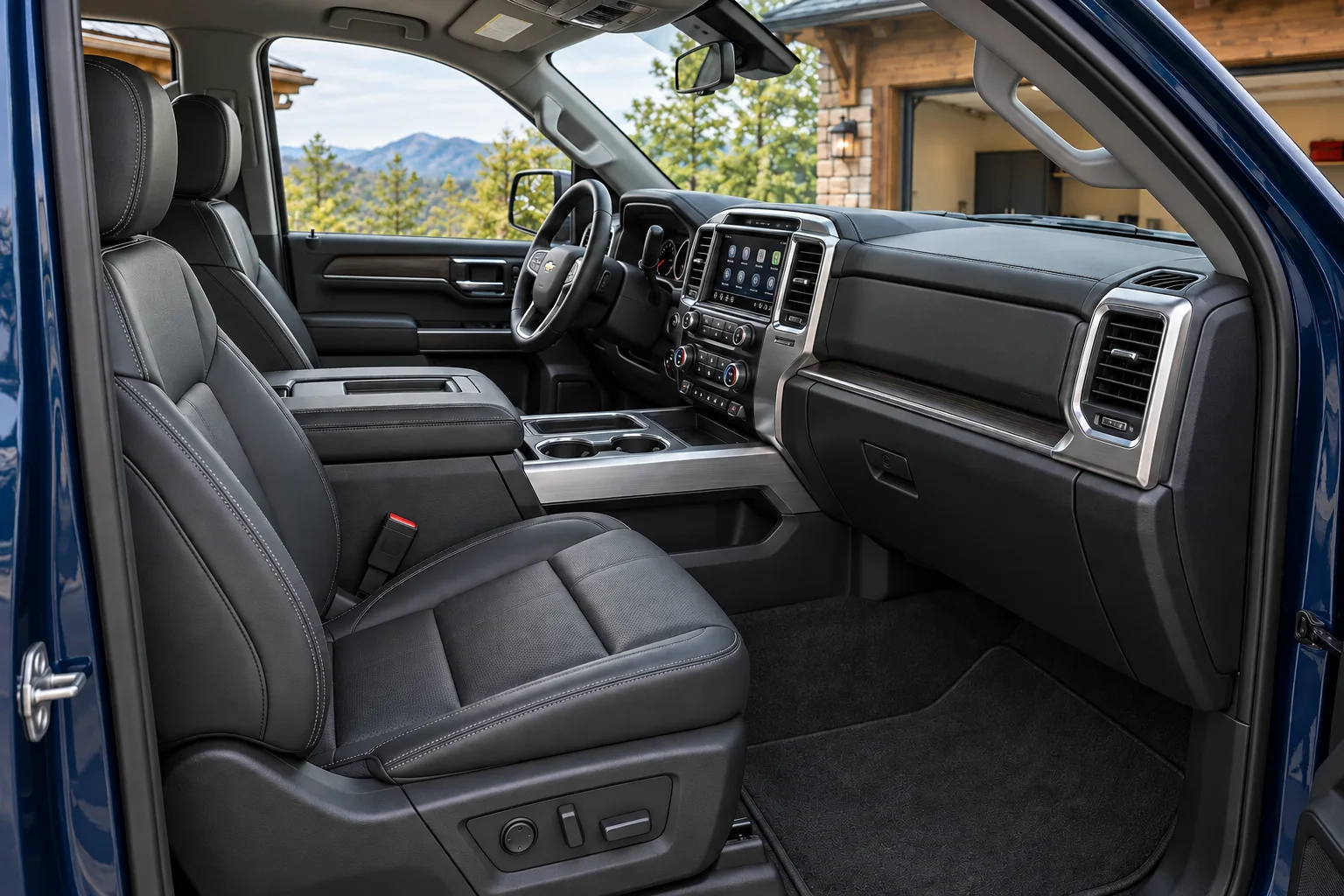
From dusty controls to a cabin that needs a deeper clean, shape an interior-detailing request around your vehicle’s materials and condition. Independent providers confirm the methods, price and mobile availability.
Identify the seats, carpet, mats, dashboard, console, door panels and interior glass that need attention. Tell the detailer about leather, cloth, delicate trim or existing damage. Material-appropriate care matters more than applying the same process to every cabin.
02
Describe the problem, not just “a deep clean.”
Pet hair, food spills, embedded sand and staining create different jobs. Share which areas are affected, how long the issue has been there and any cleaning already attempted. Shampooing or extraction should be discussed as a specific task, not assumed from the word “detail.”
03
Agree on realistic results and drying.
Ask what improvement is realistic and whether a small test area is appropriate. Some marks, wear and odors may remain. Confirm any drying time, access needs and whether the vehicle can be used immediately after the work.
BEFORE YOU BOOK
Match the work to what is inside.
Pet hair and everyday debris
Describe the affected seats, carpet and cargo area, including whether hair is lightly scattered or embedded. Ask how the detailer prices the extra time and whether complete removal is realistic.
Seats, mats and carpet
Discuss vacuuming, spot treatment and any proposed shampoo or extraction. Ask how the method suits the material and how drying will be handled. this guide does not promise a particular chemical, steam process or machine.
Spills, stains and odors
Give the cause and age if known. Ask whether the problem needs surface cleaning, deeper treatment or another specialist. Persistent leaks, contamination and material damage should not be hidden under a promise of a fresh scent.
02 / INTERIOR
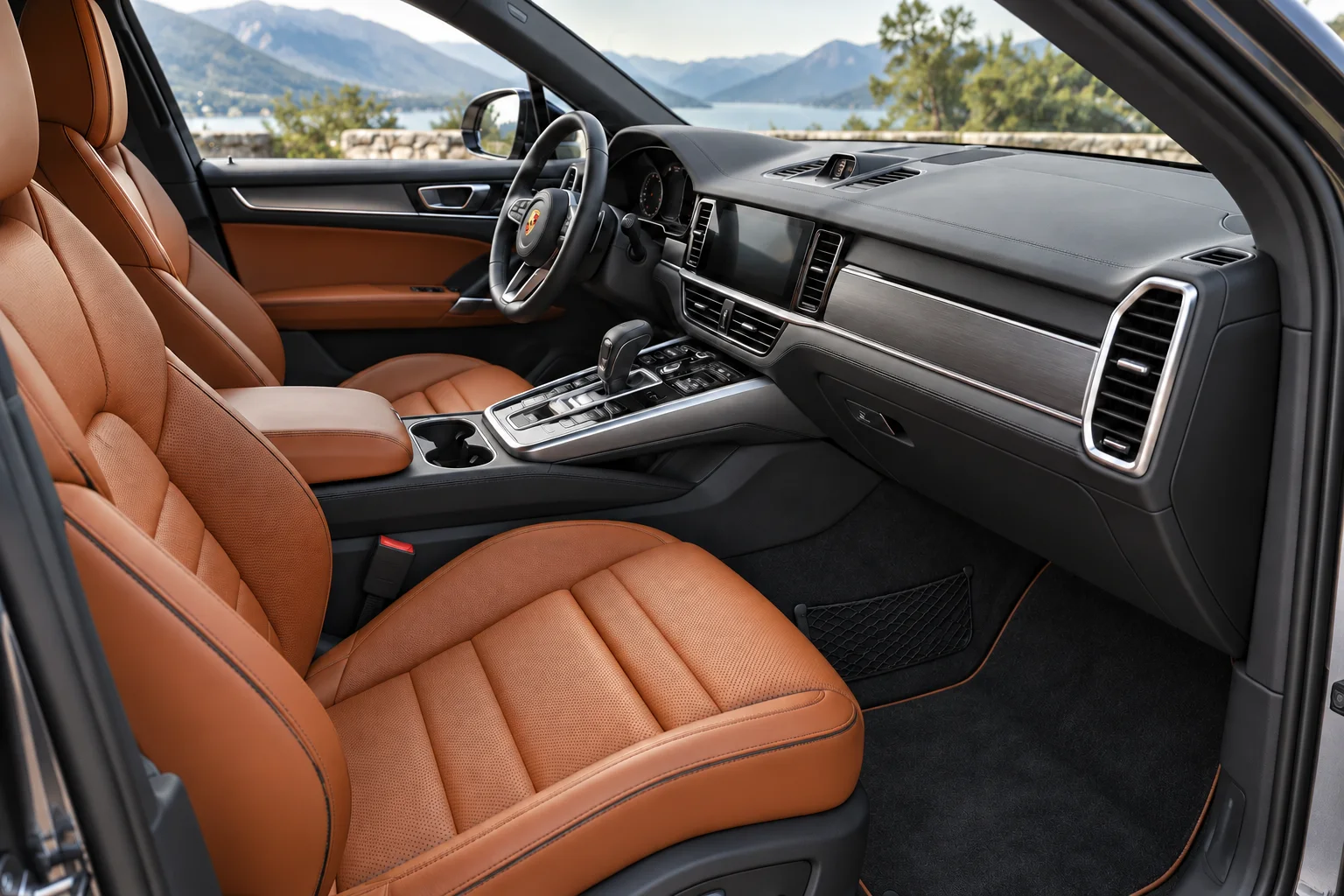
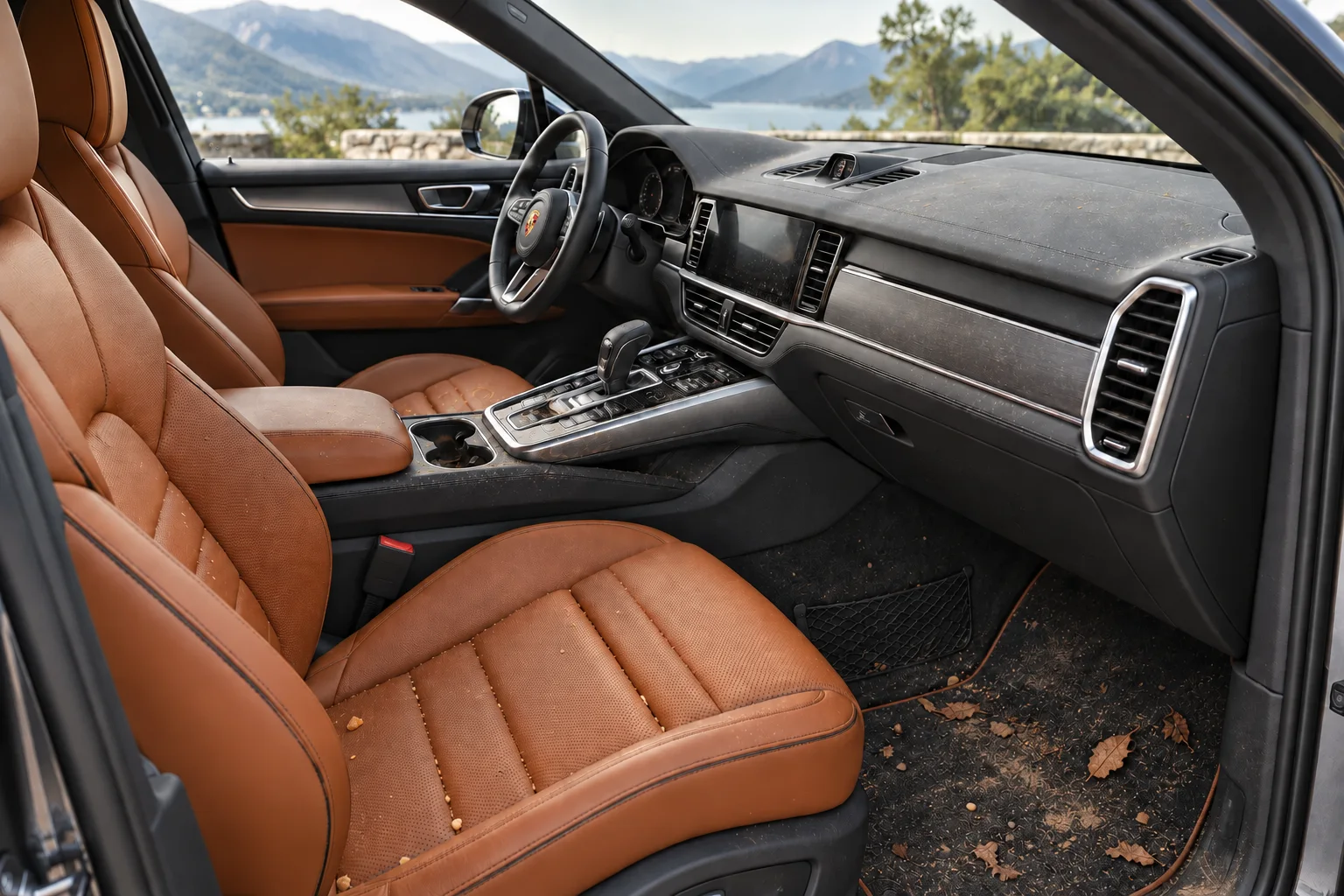
Room for a fresh start.
Explore the illustrative difference.
BeforeAfter
‹ ›
Drag to compare Keyboard: left and right arrow keys
A CLOSER LOOK
A good interior detail starts with a material map and a clear problem description. Cleaning, stain reduction, odor investigation and repairing worn trim are different jobs.
Give the detailer a useful cabin brief.
Describe the vehicle and row count, then list the affected surfaces rather than requesting “everything.” A short brief might read: “Five-seat sedan, cloth seats, dog hair in the rear footwell, coffee on the front passenger cushion; no fragrance preferred.” Mention prior cleaning attempts and any areas that should be left untouched.
Leather, coated upholstery, synthetic seating and fabric need different decisions. A material that looks like leather in a photograph may not be leather. The provider should identify it before choosing a treatment. Tesla’s manual is one example of why a universal leather conditioner or general glass cleaner is not appropriate everywhere: its seats and displays have distinct instructions.
Separate cleaning from restoration.
Set a realistic interior outcome
Concern
Useful outcome to discuss
Question before work
Loose debris
Accessible crumbs, dust and grit removed
Which seat gaps, storage areas and cargo spaces are included?
Embedded hair
Reduction appropriate to fibers and access
Is this extra labor, and what may remain?
A known spill
A material-compatible test and treatment
Can the discoloration be improved without harming the surface?
Recurring odor
Identify a likely source and next step
Is a leak or damaged material outside the cleaning scope?
Worn or cracked trim
Cleaned surface with wear still visible
Does repair require an upholstery or trim specialist?
Plan access, drying and the final check.
Before the appointment, remove personal belongings and identify valuables, sensitive documents and fragile accessories. Discuss child seats in advance; do not assume their removal, cleaning or reinstallation is included. Agree who is responsible for following the seat manufacturer’s instructions.
For any wet cleaning, ask when the seats and carpet are expected to be usable and what happens if conditions delay drying. At handoff, inspect the areas you identified, ask about residual marks and confirm any aftercare. A fresh scent is a preference, not evidence that the original odor source has been resolved.
What is the difference between an interior clean and a full detail?
An interior request focuses on the cabin. “Full detail” can mean different combinations of interior and exterior work, so compare written inclusions. Neither label automatically includes extraction, correction or a coating.
Can mobile detailers shampoo car seats?
Some providers offer shampooing or extraction, depending on materials, equipment, access and drying conditions. Ask whether it is appropriate for your seats and included in the quote. No provider capability is guaranteed by this guide.
Can every stain or smell be removed?
No result should be guaranteed before an inspection. The source, age, previous treatment and condition of the material all matter. Ask what can be improved, what may remain and when a different specialist is needed.
Do you cover SUVs, pickups and work vehicles?
These are suitable vehicle types to describe in a request. Include the row count, seating material, cargo area and extent of soil. A provider confirms whether the vehicle fits their capability and how its size changes the quote.